Who's Responsible for Your Sewer Line? A Homeowner's Guide for Puyallup & Tacoma
If a sewer line backs up in your yard or your basement, the first question almost every homeowner asks is the same: is this mine to fix, or is it the city's problem?
Here's the short answer. In Puyallup, Tacoma, and most South Sound cities, you're responsible for the "side sewer," the pipe running from your house to the city's main sewer line, while the city is only responsible for the main line itself. That includes the pipe under your yard, under your sidewalk, and often under part of the street, all the way up to where it connects to the city's system. Where exactly that connection point sits, and what actually counts as an emergency versus something you can plan around, is where most of the confusion (and most of the expensive surprises) happen.
This guide walks through how that responsibility line actually works, what it means for older homes across Puyallup, Tacoma, and the surrounding South Sound area, and what to do if you think your side sewer is starting to fail.
What Is a "Side Sewer," Exactly?
A side sewer (sometimes called a sewer lateral or private sewer connection) is the underground pipe that carries wastewater from your home's toilets, drains, and fixtures out to the city's public sewer main. Think of it like the private driveway connecting your house to the public road, except instead of a road, it's the municipal sewer system running under the street.
Every home connected to city sewer has one. In older neighborhoods across Puyallup and Tacoma, these lines are often original to the house. A home built in the 1950s or 60s may still be running wastewater through a sewer lateral that was installed before the moon landing.
Where Does My Responsibility End and the City's Begin?
This is the part homeowners get wrong most often, so it's worth slowing down on.
Using Tacoma's published side sewer guidance as the clearest local example, the homeowner is responsible for maintaining the entire side sewer, from the building all the way to the city's main line. The city's responsibility starts at the main itself, including the connection fittings (the tees, wyes, and risers where your private line ties into the public system).
So in practice:
You're on the hook for: the pipe under your house, your yard, your driveway, your sidewalk, and in many cases the section running under the street to the main. Yes, even the part in the public right-of-way is usually still yours.
The city takes care of: the sewer main itself and the fittings where it connects to your line.
Exact boundaries and terminology shift a bit from city to city, and permit and inspection requirements vary by jurisdiction. Tacoma, Puyallup, Gig Harbor, Bonney Lake, Graham, Olympia, Renton, and Auburn each run their own public works and utility codes. If you're not sure where your specific city draws the line, your local public works or wastewater utility department can tell you, and any licensed plumber pulling a permit for the work will need that answer anyway.
Do I Have to Fix It Right Away?
Not always. It really depends on what "it" is.
If your side sewer is old but still draining fine, most cities don't require you to proactively replace it. Plenty of homes run for years on aging clay, cast iron, or Orangeburg (bituminous fiber) pipe without any issue.
Where it turns urgent is when the line causes a sanitary sewer overflow, meaning sewage backs up into your home, your yard, or a storm drain. At that point, cities like Tacoma will typically notify the homeowner and set a deadline for repair. Ignore that notice and you can end up with fines or, in serious cases, a water service shutoff. This isn't a corner worth cutting. Sewage backups are a genuine health hazard, and an emergency after-hours repair almost always costs more than a planned one.
Signs Your Side Sewer May Be Failing
Because this pipe is buried and out of sight, most homeowners never think about it until something goes wrong. Keep an eye out for:
Slow drains throughout the house. Not just one fixture, but several drains backing up around the same time, which points to a problem in the main line out rather than a single clogged trap.
Gurgling toilets when you run the washing machine or shower.
Sewage odor in the yard, especially near where the line likely runs toward the street.
A noticeably greener, lusher patch of lawn over the line. Often a sign of a leak feeding the grass.
Soggy or sunken ground in the yard, which can point to a collapsed or leaking section.
Recurring backups after cleaning. If a drain keeps clogging shortly after being cleared, the pipe itself, not just debris, is usually the real issue.
Why Older South Sound Homes Are Especially at Risk
This isn't a hypothetical problem for a lot of the housing stock in Puyallup, Tacoma, and the surrounding area. Homes built before the 1970s were commonly plumbed with clay, cast iron, or Orangeburg side sewers, materials that were standard at the time but are now well past their expected service life. Clay pipe joints crack and shift with the region's heavy rainfall and clay-heavy soil. Cast iron corrodes from the inside out. Orangeburg pipe can deform and collapse under its own weight after enough decades sitting in wet Pacific Northwest ground.
On top of the aging materials, the Pacific Northwest adds a second problem: tree roots. Maples, alders, and evergreens are common throughout the South Sound, and their roots chase any source of moisture they can find. A hairline crack in an old clay joint is exactly that kind of moisture source. Once roots get in, they expand, trap debris, and turn a small crack into a full blockage.
How Do Plumbers Actually Diagnose a Side Sewer Problem?
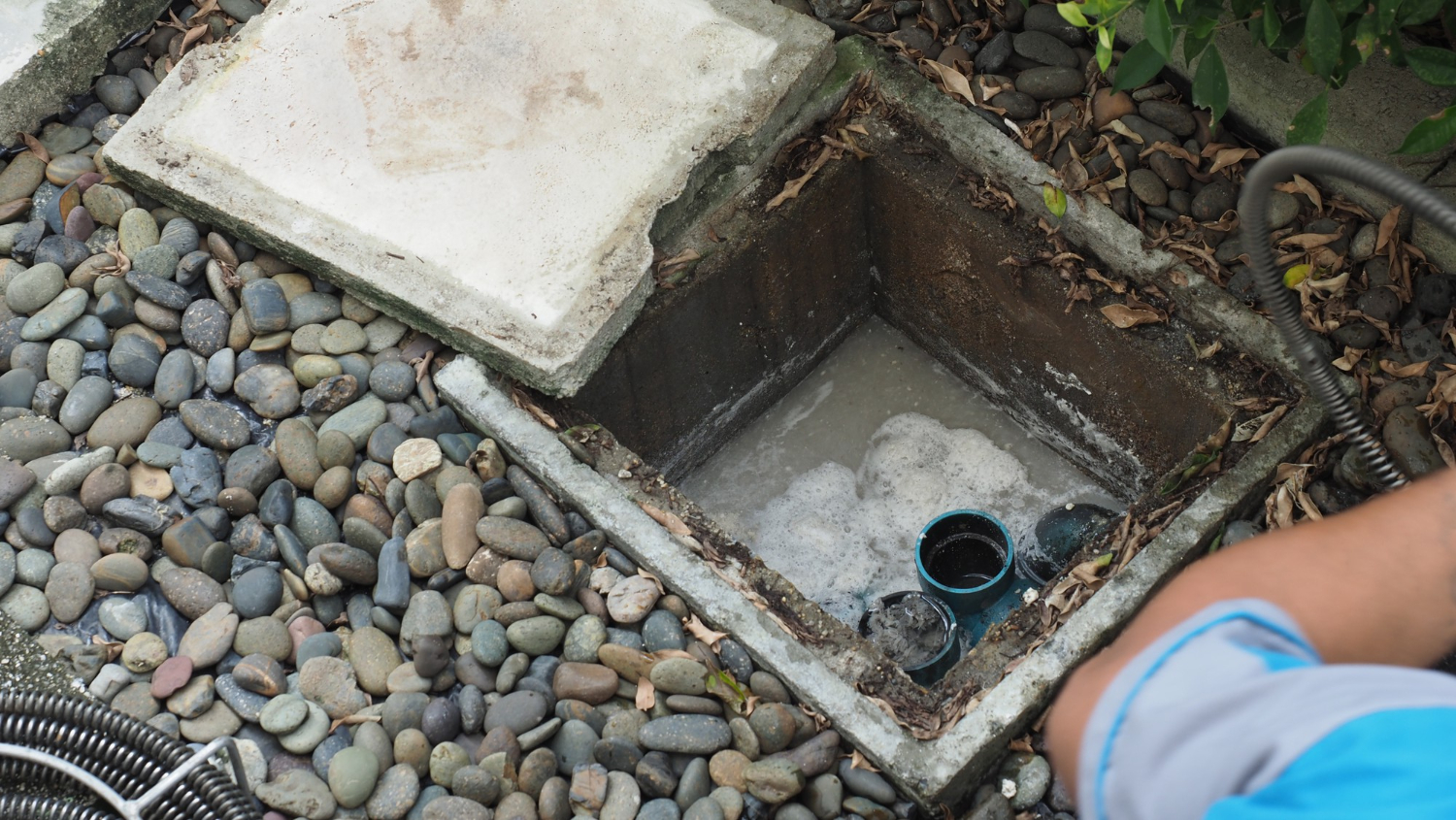
You can't see a buried pipe, so diagnosis starts with a sewer camera inspection, a waterproof camera fed through a cleanout or access point that lets a plumber see the interior condition of the line in real time. This shows exactly where a break, root intrusion, or sagging section sits, and how far down the pipe it runs, without any guesswork or unnecessary digging.
From there, the repair approach depends on what the camera turns up:
Hydro-jetting clears root intrusion and buildup from a line that's still structurally sound, using high-pressure water instead of a mechanical snake.
Spot repair replaces a short damaged section without touching the rest of the line, when the damage is localized.
Trenchless pipe lining or bursting replaces a full side sewer with minimal excavation, pulling a new pipe through the old one's path. Often the better option when a line runs under a driveway, mature landscaping, or the street.
Traditional excavation and replacement is still sometimes the right call for severely collapsed or badly misaligned lines.
What Does Side Sewer Repair Cost?
Costs vary by pipe length, depth, material, and how much of the line runs under hardscape like a driveway or the street, but homeowners should expect a meaningful investment. As a reference point, Tacoma's own homeowner guidance puts typical side sewer repair costs in the $5,000 to $10,000 range, and similar figures generally hold across the South Sound. Trenchless methods often reduce excavation and restoration costs even when the pipe material cost is comparable to traditional replacement.
This is exactly why proactive camera inspections matter so much. Catching a problem while it's still just a "slow drain" issue, instead of after it turns into a sanitary sewer overflow, is almost always the difference between a planned repair and an emergency one.
Homeowner Checklist: Protecting Yourself Before It Becomes an Emergency
Know your line. If you own an older home in Puyallup, Tacoma, or a nearby South Sound city, find out (or ask a plumber to help you find out) where your side sewer runs and what it's made of.
Don't wait for a backup to get a camera inspection, especially if your home was built before 1980 or you've had recurring slow drains.
Keep records of any inspection or repair. If you ever sell the home, buyers and inspectors increasingly ask about side sewer condition and city disclosure requirements.
Watch your yard, not just your drains. Soggy patches, sudden lush green strips, or sinking soil are often the earliest visible clues.
Confirm your specific city's rules before starting work. Permit requirements and where "your" pipe legally ends differ by jurisdiction, and a licensed plumber pulling the permit will need those specifics.
FAQs About Side Sewer Responsibility
Is my side sewer really my responsibility, even under the street? In most South Sound cities, yes. The homeowner is generally responsible for the full side sewer from the house to the city main, including the section under the public right-of-way. The city's responsibility starts at the main line and its connection fittings.
How do I find out where my property's responsibility ends? Your city's public works or wastewater utility department can tell you exactly where the boundary is for your address, and a licensed plumber will confirm it as part of any permitted repair.
Do I need a permit to repair or replace a side sewer? In nearly every South Sound jurisdiction, yes. Side sewer repair and replacement typically requires a permit and inspection. A licensed plumber handles this as part of the job.
What's the difference between hydro-jetting and replacing the line? Hydro-jetting clears roots, grease, and debris from a pipe that's still structurally sound. If the pipe itself is cracked, collapsed, or misaligned, jetting will only offer temporary relief. The line needs repair or replacement.
Can tree roots really break through a sewer pipe? Roots don't break intact pipe, but they're very good at exploiting existing cracks and loose joints, which is extremely common in older clay and cast iron lines throughout Puyallup and Tacoma's mature, tree-lined neighborhoods.
How do I know if my house has an old clay, cast iron, or Orangeburg side sewer? Home age is the biggest clue. Homes built before the 1970s are the most likely candidates. A camera inspection is the only way to confirm pipe material and condition with certainty.
What happens if I ignore a failing side sewer? If it causes a sanitary sewer overflow, the city can require repair by a deadline, with fines or a water shutoff possible for noncompliance, on top of the property damage and health hazard a backup creates.
Is trenchless repair more expensive than traditional excavation? Not necessarily. Trenchless methods often cost less overall once you factor in restoring a driveway, lawn, or landscaping that traditional excavation would have to dig through.
Does homeowners insurance cover side sewer repair? Coverage varies quite a bit by policy and cause of damage, so homeowners should check with their insurance provider directly. Many standard policies exclude gradual wear-and-tear failures.
Who do I call if I'm not sure whether I have a side sewer problem? A licensed local plumber can run a camera inspection to give you a definitive answer before you spend money on the wrong fix.
If you're dealing with slow drains, recurring backups, or you just want to know what condition your side sewer is really in before it becomes a 2 a.m. emergency, Legacy Plumbing offers camera inspections and side sewer repair throughout Puyallup, Tacoma, Gig Harbor, and the surrounding South Sound. Contact us today to schedule an inspection and get a straight answer about what's under your yard.
